Small town America in County Highway magazine
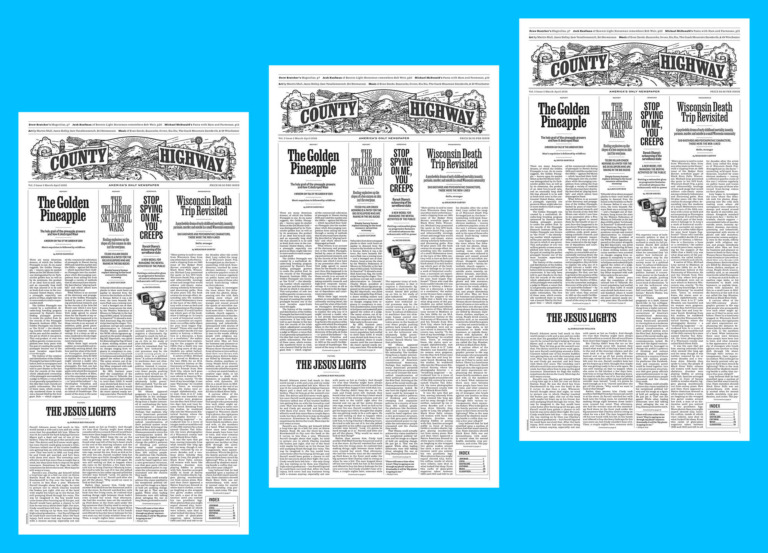
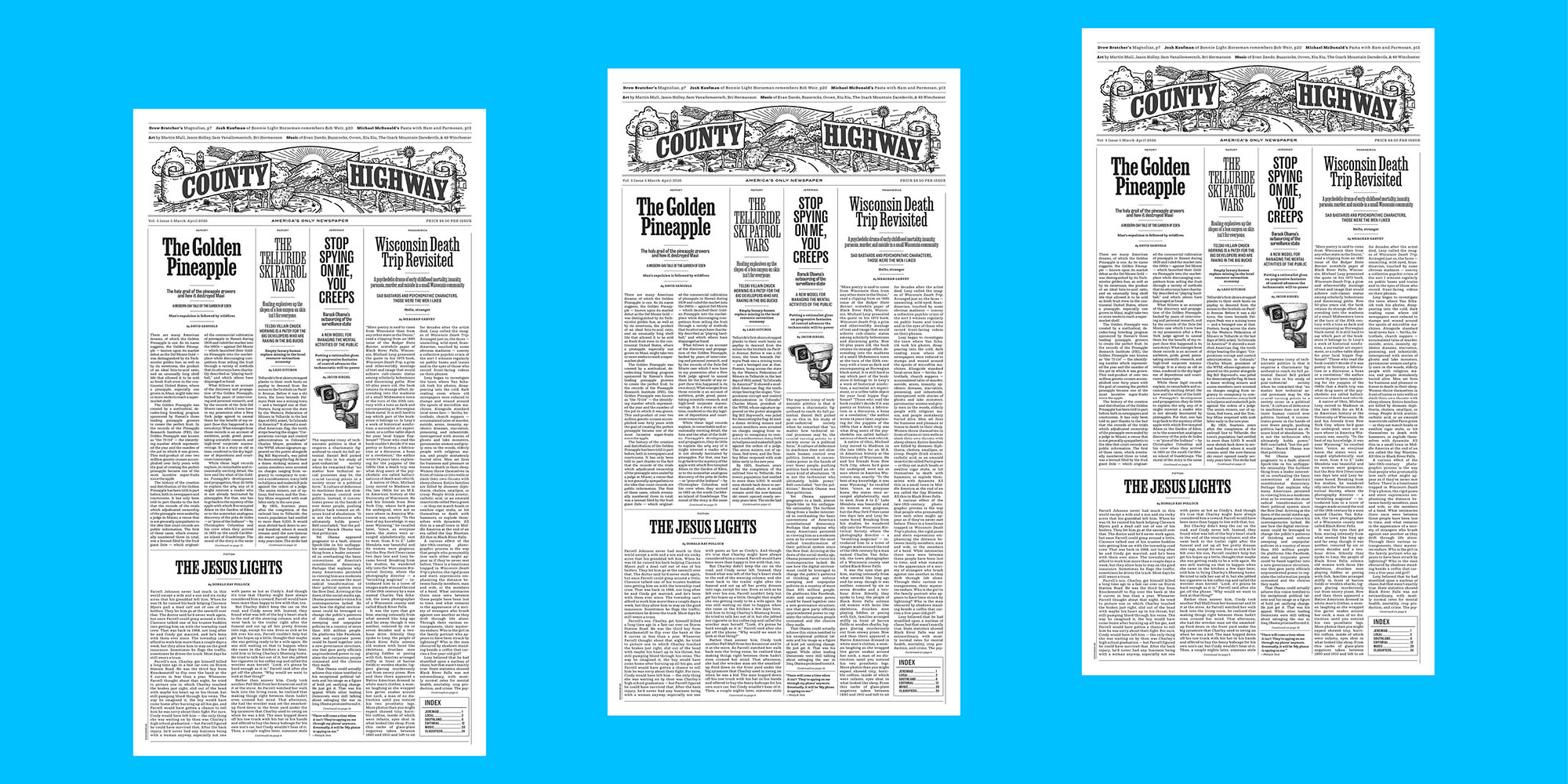
Reading County Highway magazine is a strange experience, for several reasons. First of all there’s the fact that it’s designed to look like a 19th-century newspaper, its big pages filled with tightly spaced text. That’s unusual, but there’s a clear logic to it, suggesting that this magazine’s makers want to reconnect with a slower, simpler time, before media was chopped into endlessly regurgitated vertical videos.
The oddity that I found harder to understand is County Highway’s political affiliation, or more accurately, the lack of it. We delivered the magazine to Stack subscribers in April, and when managing editor Ryan Basemann joined us for our Magazine Club evening last month, he explained the importance of not being drawn into party politics:
“A lot of media today is pretty camped, right? Like you can see those grid axes, with the x and the y, and you can kind of see where everybody falls in the political spectrum. You know, socialist, libertarian, conservative… County Highway’s right dead centre in the middle of all of it, which is kind of the point.”
After all, this is a magazine that tells stories about America beyond its big cities, for a largely rural readership. There tend to be more Democrat voters in cities and more Republicans in the countryside, so conventional thinking would dictate that County Highway is likely to have a sizable number of Republican readers. But rather than pandering to a particular point of view, the lack of politics on these pages is about breaking out of the frustrating binaries of supporting one party or another.
And it’s not easy – Ryan acknowledges that both readers and writers can be put off by this approach, which runs the risk of confusing people who are used to media with overt political affiliations. But it’s essential to an editorial project that seeks out and amplifies a wide range of American voices, from all walks of life:
“If you come and you work with County Highway and you publish your work with us, the camp that you’re aligning yourself with is the camp that, you know, lives in the United States and is curious about their neighbours.”
It was really interesting hearing his story of how the magazine came together, and how they built their own distribution network of independent retailers, so they can reach readers via local diners, barber shops, and general stores in small towns across the US and Canada. You can see our whole conversation below, as well as the videos from lots of other Magazine Club evenings.
And of course the best way of getting to know these magazines is to read them for yourself – sign up to Stack and we’ll deliver a different independent publication to your door every month, and then we’ll invite you to a conversation with the people who made it.